
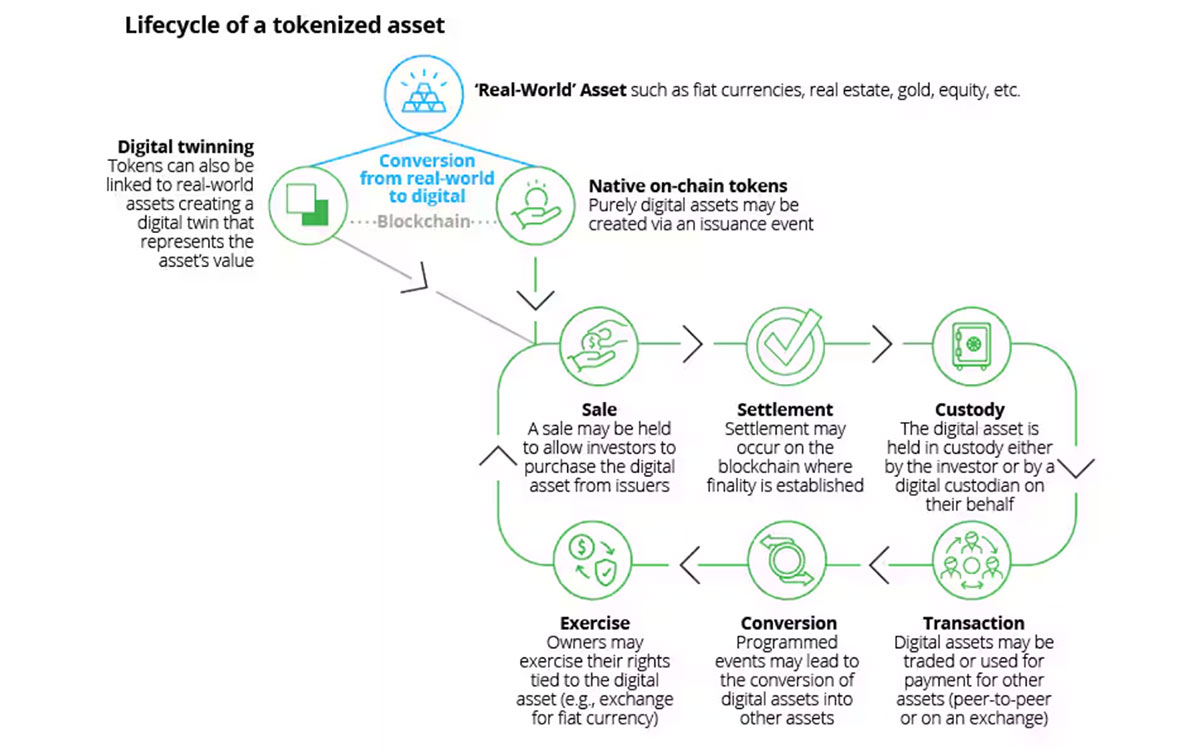
In the dynamic realm of finance, a concept has emerged with the potential to reshape the industry as we know it: tokenization. This innovative process involves linking traditional financial assets to digital tokens traded on distributed ledgers, opening doors to a new era of digital securities. Deloitte's recent whitepaper delves into the intricacies of tokenization, exploring its transformative possibilities and the challenges it presents.
Tokenization offers a compelling vision of the future, promising to revolutionize the way financial assets are traded and managed. By digitizing assets such as unrestricted common stock, bonds, exchange-traded products, and commodities, tokenization enables fractional trading and broadens access to previously illiquid markets. This democratization of access has the potential to attract new investors and unlock untapped value in the financial ecosystem.
However, realizing the full potential of tokenization requires overcoming a series of challenges. Regulatory uncertainty looms large, with many jurisdictions lacking clear guidelines for tokenized securities. This ambiguity complicates compliance efforts for financial institutions, who must navigate a complex regulatory landscape while ensuring adherence to existing laws and regulations. Yet, there are signs of progress, with proactive regulators in some regions issuing guidance and creating sandboxes to facilitate innovation in the tokenization space.
Privacy concerns represent another significant hurdle for tokenization efforts. While distributed ledgers offer unprecedented transparency, they also raise questions about data privacy and security. Striking the right balance between transparency and privacy is essential to building trust among investors and fostering widespread adoption of tokenized assets.
Integration with legacy systems presents yet another challenge for institutions embarking on the tokenization journey. While tokenization holds the promise of streamlining operations and reducing costs, the process of integrating new technology with existing systems is fraught with technical complexities. Financial institutions must navigate regulatory approvals, legal considerations, and system upgrades to fully leverage the benefits of tokenization.
Moreover, tokenization introduces a host of tax and accounting implications. From capital requirements to valuation methodologies, financial institutions must navigate a maze of regulatory requirements and tax considerations. While tokenization may simplify certain accounting processes, it also poses new challenges in determining the legal status of tokenized assets and their tax treatment.
Despite these challenges, the potential benefits of tokenization are too significant to ignore. Early adopters of tokenization stand to gain a first-mover advantage, shaping industry standards and establishing themselves as leaders in this emerging ecosystem. By fostering a culture of collaboration and innovation, financial institutions can position themselves at the forefront of the tokenization revolution.
In conclusion, tokenization represents a paradigm shift in the world of finance, offering a pathway to unlock new markets, streamline operations, and drive innovation. While challenges remain, proactive regulatory initiatives and industry collaboration can pave the way for widespread adoption of tokenized assets. As financial institutions navigate this transformative journey, those who embrace tokenization early stand to reap the rewards of a future powered by digital securities.
Disclaimer
Ohanae Securities LLC is a subsidiary of Ohanae, Inc. and a member of the Financial Industry Regulatory Authority and Securities Investor Protection Corporation (FINRA/SIPC). Additional information about Ohanae Securities LLC is available on BrokerCheck.
Ohanae Securities LLC is currently in discussions with FINRA regarding the potential expansion of its business lines, which may include custody and related services for crypto asset securities. Any statements regarding the capabilities or services of Ohanae Securities LLC are subject to regulatory approval, and there can be no assurance that such approvals will be obtained.
Ohanae Securities LLC intends to operate in a manner that addresses the unique characteristics of crypto asset securities, including maintaining robust policies and procedures for custody, safeguarding of private keys, and evaluation of distributed ledger technology. The firm’s approach is designed to support crypto asset securities that may not efficiently operate within the traditional National Market System (NMS). Subject to applicable regulatory approvals, Ohanae Securities LLC may expand its activities to include additional services that may be conducted in a dealer-principal capacity, with the objective of protecting investors and maintaining market integrity.