
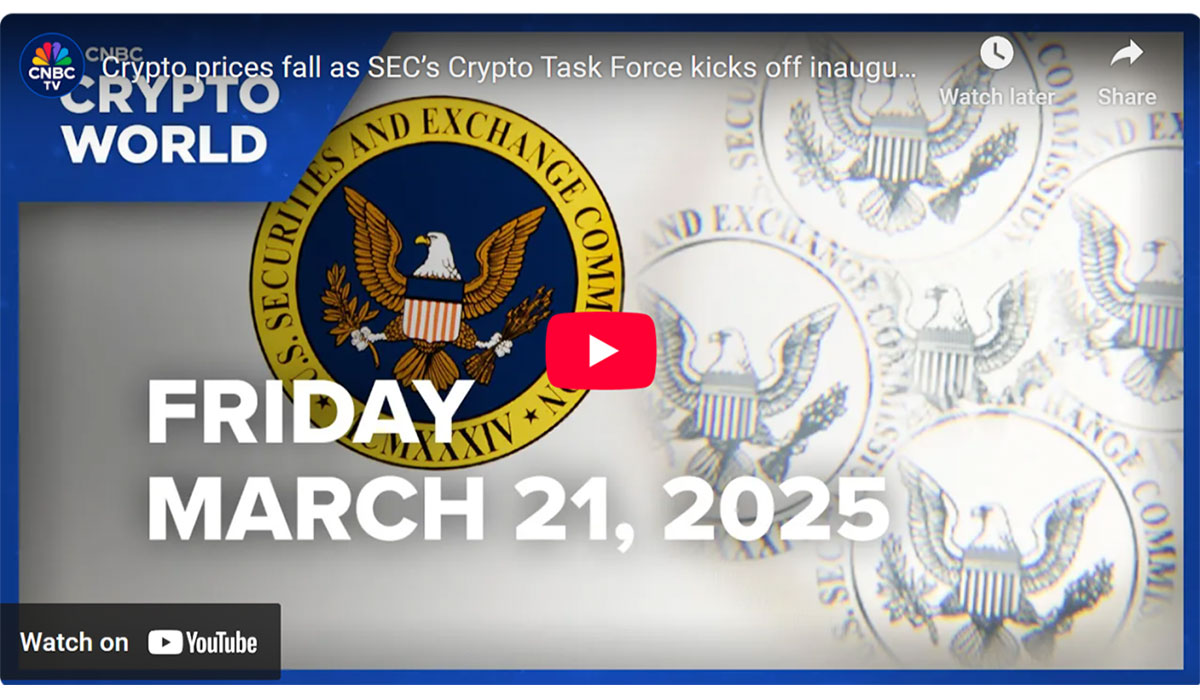
I attended the Live Stream event of the SEC Crypto Task Force Roundtable today, and it was one of the most insightful discussions I have seen on the future of crypto regulation. The roundtable, held at the SEC headquarters in Washington, D.C., was moderated by Troy Paredes (former SEC Commissioner) and included a powerhouse panel.
Objective of the Roundtable
The core objective of the roundtable was to define the security status of crypto assets and explore how to create a regulatory framework that balances:
- Innovation and market development
- Investor protection
- Legal clarity under existing securities laws
Chairman Mark Uyeda, Commissioners Hester Peirce, and Caroline Crenshaw opened the session by highlighting that crypto regulation has reached an inflection point — and that it’s time for the SEC to move from enforcement-based regulation to a more structured framework.
The Problem Statement
The crypto industry currently operates in a gray zone:
- Many crypto assets function like securities under the Howey Test but are not registered as such.
- Crypto exchanges and platforms operate without proper broker-dealer, exchange, or clearing agency registration.
- The lack of disclosure, audited financials, and investor protection mechanisms creates systemic risk and exposes investors to fraud, manipulation, and loss.
- Political and lobbying pressures have complicated the SEC’s regulatory approach — leading to inconsistent enforcement and growing market uncertainty.
John Reed Stark laid out the stark reality: Crypto has become a tool for ransomware, fraud, and money laundering, while crypto companies sidestep existing securities laws through clever language and legal loopholes. He warned that the SEC's recent pivot toward a more "friendly" posture toward crypto firms could undermine decades of hard-won investor protection.
My Perspective – Why Reg A+ Tier 2 and ETO Could Solve This
Listening to the roundtable, it became clear to me that the solution might already exist within the current securities framework — specifically Reg A+ Tier 2 exemption.
Instead of creating a new crypto-specific framework, why not apply Reg A+ Tier 2 as the standard for tokenized crypto assets?
Here's why this could work:
Disclosure and Transparency: Reg A+ already requires comprehensive disclosures, including audited financials and business model transparency.
Compliance: Issuers would have to register with the SEC and comply with existing securities laws — eliminating the regulatory gray zone.
Investor Protection: Reg A+ includes investor caps for non-accredited investors and ongoing reporting requirements — creating a safer market for retail investors.
Liquidity: After a Reg A+ offering, crypto securities could be traded on an Alternative Trading System (ATS) like the Ohanae platform, using an Automated Market Maker (AMM) to ensure fair price discovery and market stability.
Equity Token Offering (ETO): The Ohanae platform could facilitate Equity Token Offerings (ETOs) under Reg A+ Tier 2.
- An ETO would allow crypto projects to raise capital by issuing tokenized equity that represents a stake in the crypto project.
- Investors would benefit from both capital appreciation and dividends tied to the performance of the crypto project.
- ETOs would create a new, compliant path for capital formation in the crypto industry while aligning investor incentives with crypto project growth.
This approach would convert crypto from an unregulated speculative product into a legitimate financial instrument. It would provide the SEC with jurisdiction and oversight while maintaining the innovation and decentralization that the crypto industry values.
A Path Forward
The SEC Crypto Task Force has a golden opportunity to bring order to the chaos of crypto markets — without stifling innovation. Applying Reg A+ Tier 2 as the framework for tokenized crypto assets would instantly solve many of the disclosure, compliance, and investor protection gaps highlighted at the roundtable.
Crypto doesn't need new rules — it needs the same rules that apply to every other financial instrument. The road ahead is challenging, but if the SEC adopts this approach, it could turn crypto into a mature, trusted asset class — and that would be a win for both investors and innovators.
What are your thoughts? Should the SEC regulate crypto assets under Reg A+ Tier 2? Would Equity Token Offerings (ETOs) provide the right balance of innovation and protection? Let me know in the comments!
Disclaimer
Ohanae Securities LLC is a subsidiary of Ohanae, Inc. and a member of the Financial Industry Regulatory Authority and Securities Investor Protection Corporation (FINRA/SIPC). Additional information about Ohanae Securities LLC is available on BrokerCheck.
Ohanae Securities LLC is currently in discussions with FINRA regarding the potential expansion of its business lines, which may include custody and related services for crypto asset securities. Any statements regarding the capabilities or services of Ohanae Securities LLC are subject to regulatory approval, and there can be no assurance that such approvals will be obtained.
Ohanae Securities LLC intends to operate in a manner that addresses the unique characteristics of crypto asset securities, including maintaining robust policies and procedures for custody, safeguarding of private keys, and evaluation of distributed ledger technology. The firm’s approach is designed to support crypto asset securities that may not efficiently operate within the traditional National Market System (NMS). Subject to applicable regulatory approvals, Ohanae Securities LLC may expand its activities to include additional services that may be conducted in a dealer-principal capacity, with the objective of protecting investors and maintaining market integrity.