
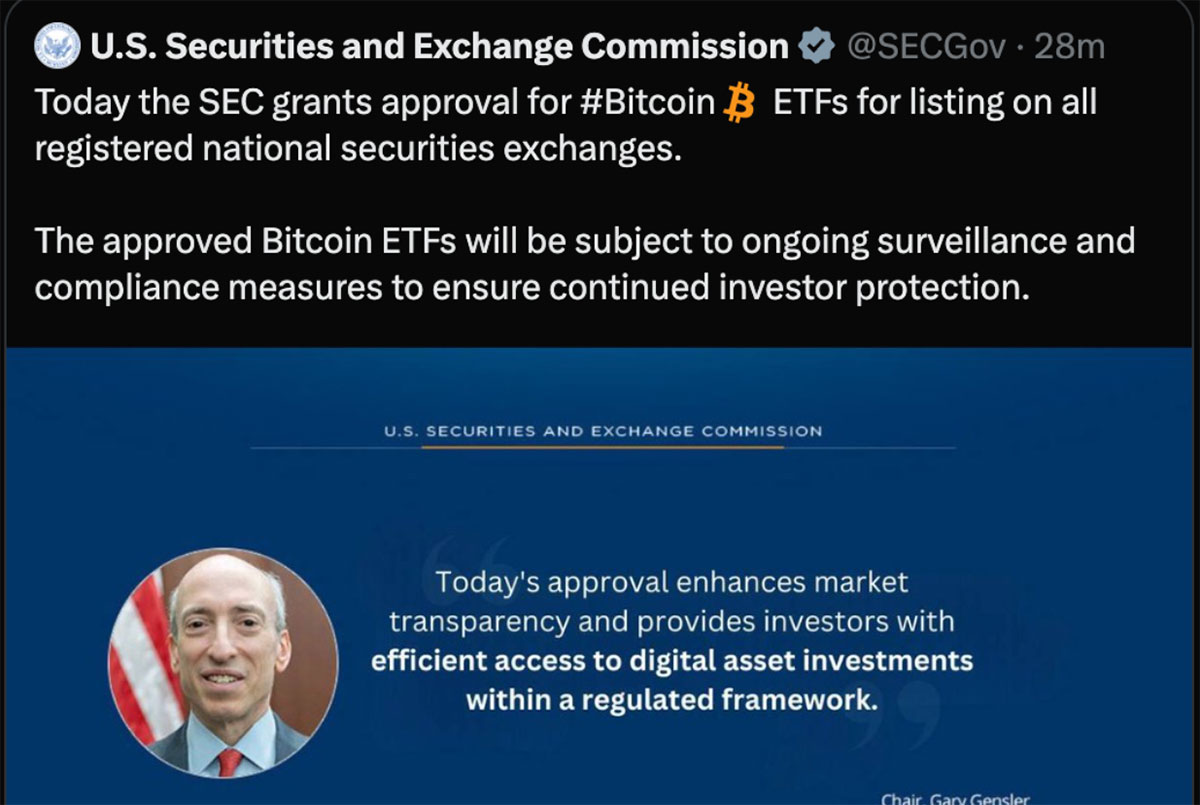
The recent approval of Bitcoin exchange-traded funds (ETFs) by the U.S. Securities and Exchange Commission ("SEC") in January 2024 marked a watershed moment for the cryptocurrency market. This decision not only signifies broader acceptance of digital assets but also expands access for investors seeking exposure to Bitcoin's price movements. However, while Bitcoin ETFs offer a convenient entry point into the crypto space, they may not align with every investor's objectives. Let's delve into the nuances of Bitcoin ETFs and explore when they're suitable and when they're not.
Bitcoin ETFs: A Gateway to Crypto Investing
Bitcoin ETFs represent a significant innovation in cryptocurrency investing, akin to traditional ETFs for gold and other assets. These funds enable investors to indirectly access Bitcoin's price appreciation without the complexities of custody, acquisition, and disposition. By owning shares in a Bitcoin ETF, investors gain exposure to the cryptocurrency market through established financial institutions like Blackrock, Grayscale, Fidelity, and Ark Invest. This accessibility appeals to both novice investors and seasoned allocators, offering a familiar investment vehicle with low fees and simplified access.
Moreover, the advent of Bitcoin ETFs opens doors for retirement account holders, allowing them to incorporate Bitcoin into their 401(K)s and IRAs. This integration reflects the growing demand for digital assets in long-term investment strategies, further bolstering Bitcoin's legitimacy as an investable asset class.
The "One-Way Bridge" Conundrum
Despite their appeal, Bitcoin ETFs pose limitations that investors must consider. The analogy of a "one-way bridge," coined by finance thought leader Dave Nadig, underscores the loss of benefits associated with direct ownership of Bitcoin. Here are three key reasons why direct ownership may be preferable:
- Diversification: Bitcoin ETFs offer exposure solely to Bitcoin's price movements, akin to owning a single stock in a diversified portfolio. However, true diversification entails access to a range of digital assets beyond Bitcoin, ensuring resilience against market fluctuations.
- Access to the Ecosystem: Direct ownership grants investors access to the broader decentralized finance (DeFi) ecosystem, encompassing decentralized exchanges (DEXs) and various cryptocurrencies. This ecosystem fosters innovation, liquidity, and seamless global connectivity, amplifying the potential of digital assets beyond Bitcoin.
- Tax Harvesting: ETF investors forfeit opportunities for tax loss harvesting, a strategy leveraged in volatile markets to offset capital gains with capital losses. Direct ownership allows investors to capitalize on market fluctuations, optimizing tax efficiency and enhancing overall returns.
The Promise of Self-Sovereignty
Beyond financial considerations, direct ownership embodies the ethos of self-sovereignty inherent in Bitcoin's design. By self-custodying their Bitcoin, investors mitigate counterparty risk and safeguard against censorship and asset freezes. This principle aligns with Bitcoin's founding philosophy of empowering individuals to control their wealth without reliance on intermediaries or centralized authorities.
Navigating the Decision
In evaluating the suitability of Bitcoin ETFs, investors must weigh the trade-offs between convenience and control. While ETFs offer accessibility and simplicity, they entail a loss of self-sovereignty and potential benefits associated with direct ownership. Investors should align their decision with their investment goals, risk tolerance, and long-term vision for their portfolios.
Ultimately, the decision to invest in Bitcoin ETFs or pursue direct ownership hinges on individual preferences and objectives. While ETFs provide a convenient on-ramp to the crypto market, direct ownership offers greater autonomy and exposure to the broader digital asset ecosystem. By understanding the nuances of each approach, investors can navigate the evolving landscape of Bitcoin investing with clarity and confidence.
Disclaimer
Ohanae Securities LLC is a subsidiary of Ohanae, Inc. and a member of the Financial Industry Regulatory Authority and Securities Investor Protection Corporation (FINRA/SIPC). Additional information about Ohanae Securities LLC is available on BrokerCheck.
Ohanae Securities LLC is currently in discussions with FINRA regarding the potential expansion of its business lines, which may include custody and related services for crypto asset securities. Any statements regarding the capabilities or services of Ohanae Securities LLC are subject to regulatory approval, and there can be no assurance that such approvals will be obtained.
Ohanae Securities LLC intends to operate in a manner that addresses the unique characteristics of crypto asset securities, including maintaining robust policies and procedures for custody, safeguarding of private keys, and evaluation of distributed ledger technology. The firm’s approach is designed to support crypto asset securities that may not efficiently operate within the traditional National Market System (NMS). Subject to applicable regulatory approvals, Ohanae Securities LLC may expand its activities to include additional services that may be conducted in a dealer-principal capacity, with the objective of protecting investors and maintaining market integrity.